
What is menopause?
Modern Perspective:
Menopause is the natural and permanent cessation of menstruation, marking the end of a woman’s reproductive years. It is diagnosed after 12 consecutive months of missed periods, not due to any other medical condition. The average age of menopause globally is around 51 years, though it may occur anytime between 45 and 55 years.
This phase is associated with a decline in estrogen and progesterone levels, leading to physical, mental, and emotional changes. It’s not a disease but a biological milestone.
Ayurvedic Perspective:
In Ayurveda, menopause is referred to as “Rajonivṛtti”:
-
Raja = menstruation
-
Nivṛtti = cessation
Acharya Sushruta classifies menopause as Swabhavika (natural and inevitable)—a transition that occurs due to time-bound bodily changes, not due to any pathology.
“स्वाभावजं कालवशात् जातं विकारं न गणयेत् रोगत्वे” – Sushruta Samhita
This implies that menopause is not a disease but a natural stage of life that doesn’t need to be “cured” but rather understood and supported.
Most common symptom?
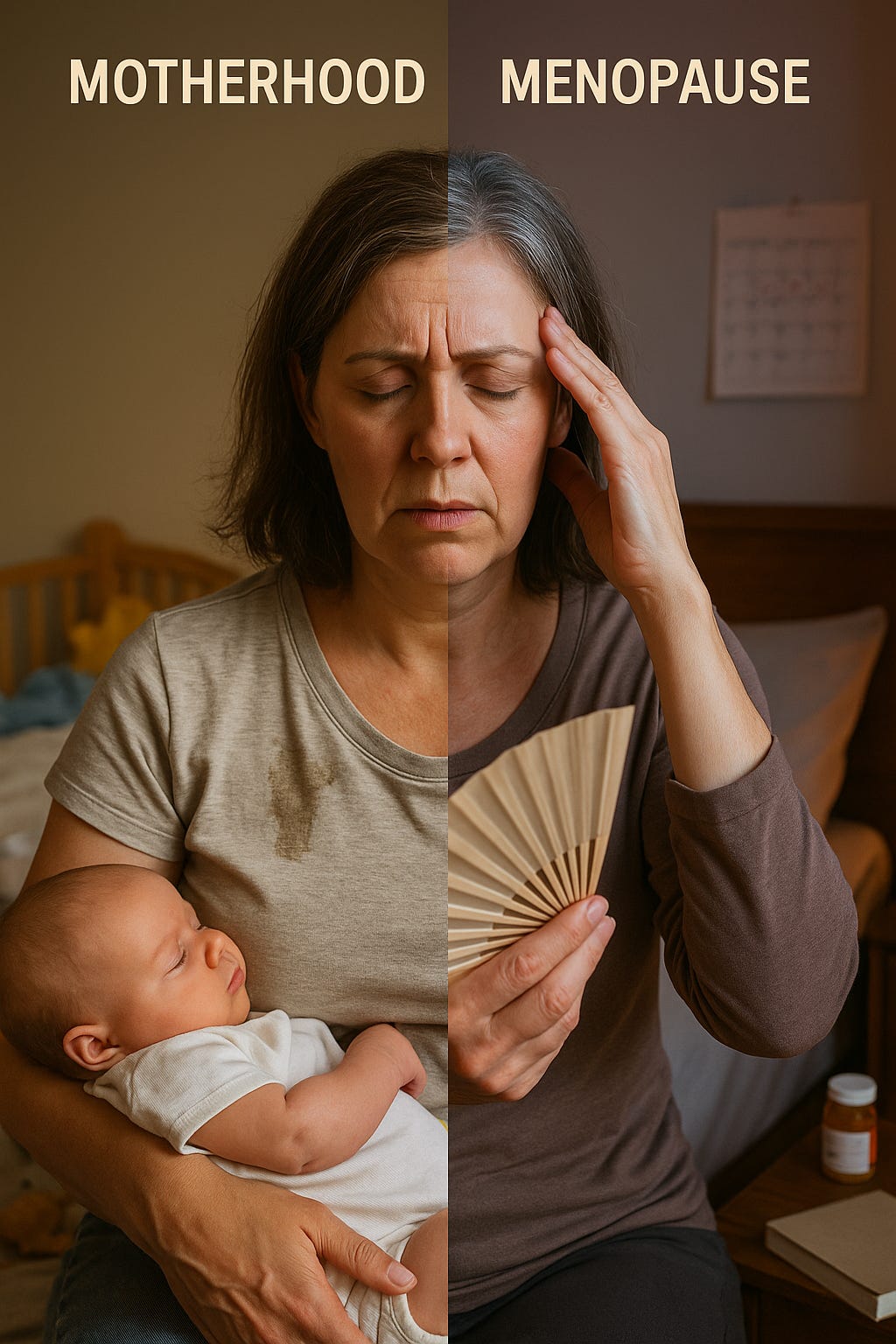
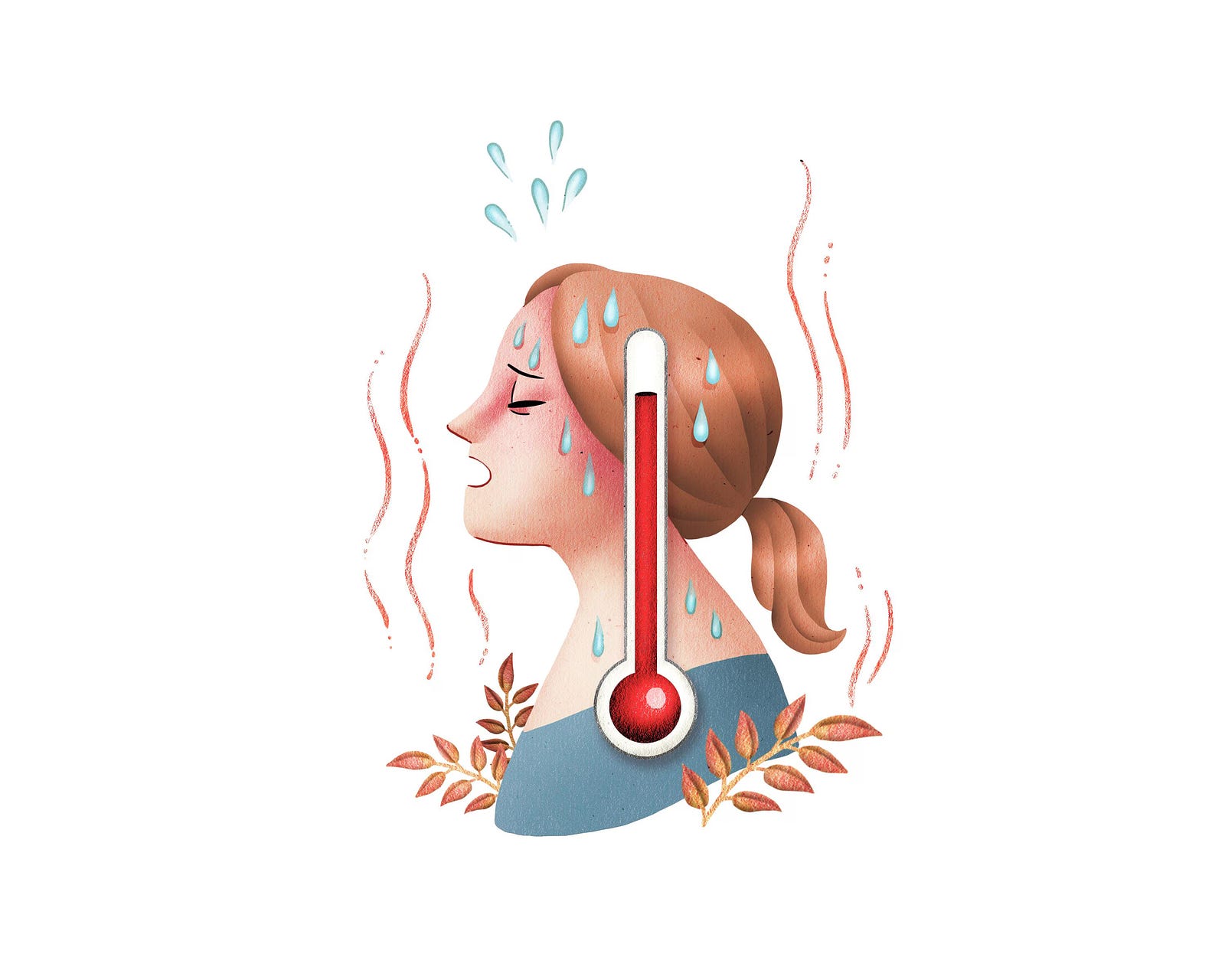
The most common and widely reported symptoms of menopause are hot flashes and night sweats, grouped under vasomotor symptoms (VMS).
-
Hot flashes: Sudden feeling of intense heat, usually over the face, neck, and chest.
-
Night sweats: Excessive sweating during sleep, disrupting rest and comfort.
These symptoms can begin in perimenopause (the years before actual menopause) and may continue for several years after menopause.
How common?
Recent studies confirm the high prevalence of vasomotor symptoms worldwide:
-
The Study of Women’s Health Across the Nation (SWAN) in the U.S. revealed that 60–80% of perimenopausal and menopausal women report hot flashes.
-
A global review published in 2021 (Menopause Journal) observed that up to 80% of women experience hot flashes and night sweats.
-
For some women, these symptoms persist for 7–10 years post-menopause.
This means that nearly 8 out of 10 women are affected, and the symptoms can significantly impact daily life, mood, sleep quality, and work performance.
What’s really going on inside the body?
From a biomedical perspective, hot flashes are caused by dysregulation of the hypothalamus, the part of the brain that controls temperature. With the drop in estrogen, the brain becomes more sensitive to slight changes in body temperature. This leads to:
-
Sudden vasodilation (widening of blood vessels)
-
A burst of heat and sweating
-
Often followed by chills or fatigue
They are not dangerous, but they are uncomfortable and may signal hormonal shifts.
As per Ayurveda ….
Ayurveda beautifully correlates life stages with the three doshas:
Life Stage Dominant Dosha
Childhood (Bāla) Kapha
Adulthood (Madhyama) Pitta
Old Age (Vriddhavastha) Vata
During menopause (usually midlife), the body undergoes a transition from Pitta dominance to Vata dominance.
-
Pitta is responsible for heat, transformation, and metabolism
-
Vata governs movement, circulation, and regulation
When both Pitta and Vata are heightened—as happens during perimenopause—there is a disturbance in thermoregulation, leading to:
-
Heat surges (Pitta)
-
Erratic function and regulation (Vata)
Thus, hot flashes and night sweats are symptoms of Pitta-Vata imbalance in Ayurveda.
Ageing and Vata…
Aging is naturally associated with dryness, coldness, lightness, and instability—all qualities of Vata dosha. According to Ayurvedic physiology:
-
As women age, ovarian function declines, leading to reduced lubrication, mobility, and vitality.
-
These are classic signs of elevated Vata.
-
Simultaneously, Pitta’s fiery nature may still linger during the transition, causing periodic heat symptoms.
The result? A dual disturbance—unstable regulation (Vata) + excessive heat (Pitta)—results in hot flashes and night sweats.
How to manage?
There are two approaches:
-
Hormone Replacement Therapy (HRT)—a biomedical option that works well for some but comes with risks.
-
Lifestyle & Ayurvedic Management—a gentler, holistic approach that supports the body’s natural rhythm.
Ayurvedic Tips to Ease Vasomotor Symptoms:
✅ Start your morning with a Rasayana drink.
Warm milk + 1 tsp cow’s ghee.
✅ Brisk walk with sun exposure – 30 minutes daily
Supports mood, metabolism, and melatonin rhythm. It also helps in vitamin D synthesis, which is vital for bones and immunity.
✅ Abhyanga (self-massage) before bath
Use warm sesame oil, massaged gently all over the body, followed by a warm water bath.
-
Soothes nerves (Vata)
-
Nourishes skin (which becomes dry during menopause)
-
Improves sleep and circulation
Ayurvedic principle behind these healing strategies?
Ayurveda is guided by two fundamental therapeutic laws:
-
Sāmānya Vruddhikaranam – “Like increases like”
→ If you consume hot, dry, or unstable substances during a hot-flush episode, it worsens the symptom. -
Viṣama Ekātva Karanam – “Opposites bring balance”
→ When you balance hot flashes (Pitta) and instability (Vata) with cooling, unctuous, and stable routines, symptoms reduce.
Let’s move beyond symptom suppression and instead honor the process of Rajonivṛtti—the beautiful unfolding of nature’s rhythm within the woman’s body.
Consult Dr. Aishwarya Vasava in Mississauga or online
Looking for personalized Ayurvedic guidance? Explore our menopause care at Jeevdhaari Keraliya Ayurveda, 1616 Matheson Blvd Unit 25, Mississauga, or consult online from anywhere in Canada. Book an appointment or call +1 (416) 991-4809.