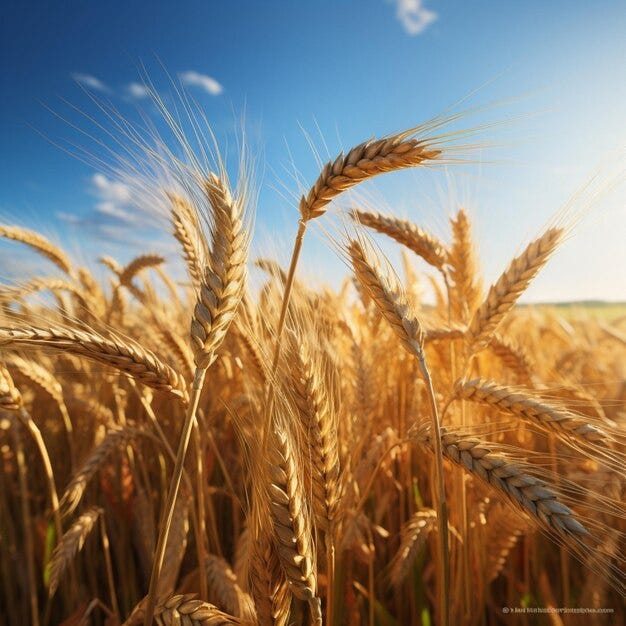

Yes, that often-overlooked grain you associate with soups or malt is a nutritional and therapeutic powerhouse. Known as Yava in Sanskrit, barley has held a revered spot in Ayurvedic medicine for millennia. Let’s explore this humble grain in a question-and-answer format that bridges ancient wisdom with modern science.
1. What is the meaning and origin of the word “Yava”?
The Sanskrit term Yava (jau in Hindi, jav in Gujarati) literally means barley. Etymologically, the word is derived from the Sanskrit root “‘yu’” which signifies joining or mixing. In Vedic literature, Yava symbolizes not just nourishment but also fertility and abundance. Its reference can be found in Atharvaveda, Rigveda, Yajurveda, and other ancient scriptures.
Barley is also one of the earliest cultivated grains. Linguistically, the word connects to similar-sounding terms in ancient languages, showing how widespread its use was even in prehistoric times.
2. How ancient is Yava? What is its historical and cultural relevance?
Barley is believed to be one of the first domesticated grains, with archaeological evidence tracing its cultivation back more than 10,000 years. It has been grown extensively in India, Egypt, Mesopotamia, Tibet, and the Mediterranean.
In Indian texts, barley is often mentioned as an offering in rituals, as a unit of measurement in Shilpashastra, and as a staple for sages and yogis.
From the Atharvaveda to Shatpath Brahmana, barley is praised for both its nutritive and medicinal value.
3. What does Ayurveda say about Yava?
Ayurveda classifies Yava under the group of Shukadhanya (substances that promote reproductive and tissue health) and many others.
Rasa Panchaka (Fivefold Ayurvedic Assessment of Barley):
-
Rasa (Taste): Kashaya (astringent), Madhura (sweet)
-
Guna (Qualities): Ruksha (dry), Guru (heavy)
-
Virya (Potency): Sheeta (cooling)
-
Vipaka (Post-digestive effect): Katu (pungent)
-
Prabhava (Special action): Lekhana (scraping/detoxifying)
This unique profile makes Yava ideal for managing Kapha and Medas (fat-related disorders), as well as Santarpanajanya Roga (diseases of overnutrition), like diabetes (Prameha), obesity (Medoroga), and skin diseases (Kushtha).
Barley is also praised in Ayurveda for its ability to
-
Reduce excess appetite (increasing satiety levels)
-
Remove toxins via bowel and urinary channels
-
Aid in clearing blockages (Srotorodha)
-
Improve metabolism and digestion
4. How does Yava help in lifestyle disorders like diabetes and obesity?
-
Increases Satiety: Due to its high beta-glucan (soluble fiber) content, barley expands in the stomach and delays gastric emptying, keeping you fuller longer.
-
Controls Blood Sugar: Barley’s low glycemic index (GI ~30) allows slow and steady glucose release.
-
Reduces Cholesterol: Beta-glucan binds to bile acids and helps flush out excess cholesterol.
-
Improves Gut Health: Acts as a prebiotic, fostering beneficial gut flora.
-
Supports Weight Loss: Its Ruksha and Lekhana properties dry and scrape excess fat and toxins.
5. Are there any modern scientific studies supporting barley’s health benefits?
Yes! Modern research aligns beautifully with Ayurvedic insights:
-
Blood Sugar Management:
-
A 2025 study (Kellogg et al., Nutrients) confirmed that high β-glucan barley significantly reduces post-meal blood sugar in healthy adults, strengthening the case for glycemic control health claims. [https://doi.org/10.3390/nu17030430]
-
-
Anti-Fatigue Effects:
-
A separate 2025 study (Zhao et al.) found that moderate highland barley intake (20% of diet) boosts anti-fatigue capacity through antioxidant effects and gut microbiome support, while excessive intake (60%+) may have downsides. [https://doi.org/10.3390/nu17040733]
-
-
Gut Microbiome & Metabolic Health:
-
Barley enhances beneficial gut bacteria, reducing inflammation and metabolic syndrome risks.
-
-
Historical Significance:
-
According to Royal Society Publishing (2024), barley has been a Mediterranean staple for nearly 8000 years, though its agrobiodiversity is still under-documented. [https://royalsocietypublishing.org/doi/abs/10.1098/rstb.2024.0194]
-
6. How is Yava mentioned in world traditions and folk medicine?
-
China: Used as a decoction for diabetes.
-
Egypt: Used intravaginally as a contraceptive by ~53% of women.
-
Iran: Decoctions used for hepatitis, ulcers, gout, and bladder inflammation.
-
Italy: Boiled seed compresses soothe joint pains.
-
Korea: Decoction used for jaundice, measles, nephritis, and more.
7. What are recent innovations and household uses of barley?
-
Barley water and tea are now popular detox drinks.
-
Barley flour (jav ka atta): For making low-GI chapatis and baked goods.
-
Barley sprouts: superfoods rich in antioxidants.
-
Barley protein: Extracted from brewing byproducts and used in vegan food.
-
High-yield cultivars, like India’s UPB1106 improve both nutrition and sustainability.
8. Is there a simple recipe I can start with today?
Absolutely! Try Barley Water (Yava Jala)
Ingredients:
-
2 tbsp whole barley (hulled preferred)
-
3-4 cups water
-
1 small stick cinnamon (optional)
-
A pinch of rock salt or lemon juice (optional)
Method:
-
Wash and soak barley for 4-5 hours or overnight.
-
Boil in water for 30-40 minutes on low flame until the grains are soft.
-
Strain the water and sip it warm.
-
Optional: Add a dash of lemon juice or cinnamon.
Dosage:
Drink 1 cup every morning for 7 days.
🪄 Result: Feel lighter and more energetic, and experience reduced bloating and better digestion.
💬 Final Word
Barley isn’t just a grain—it’s a bridge between your kitchen and your clinic. In Ayurveda, Yava is Lekhaniya (fat-scraping), Kaphahara (Kapha-balancing), and Agnivardhaka (digestive-fire enhancing).
Start your day with this humble grain and see the shift for yourself.
Try me and tag me with your #JavJournal. Your gut will thank you!
Consult Dr. Aishwarya Vasava in Mississauga or online
Looking for personalized Ayurvedic guidance? Explore our Agni Blossom digestion program at Jeevdhaari Keraliya Ayurveda, 1616 Matheson Blvd Unit 25, Mississauga, or consult online from anywhere in Canada. Book an appointment or call +1 (416) 991-4809.