
INTRODUCTION
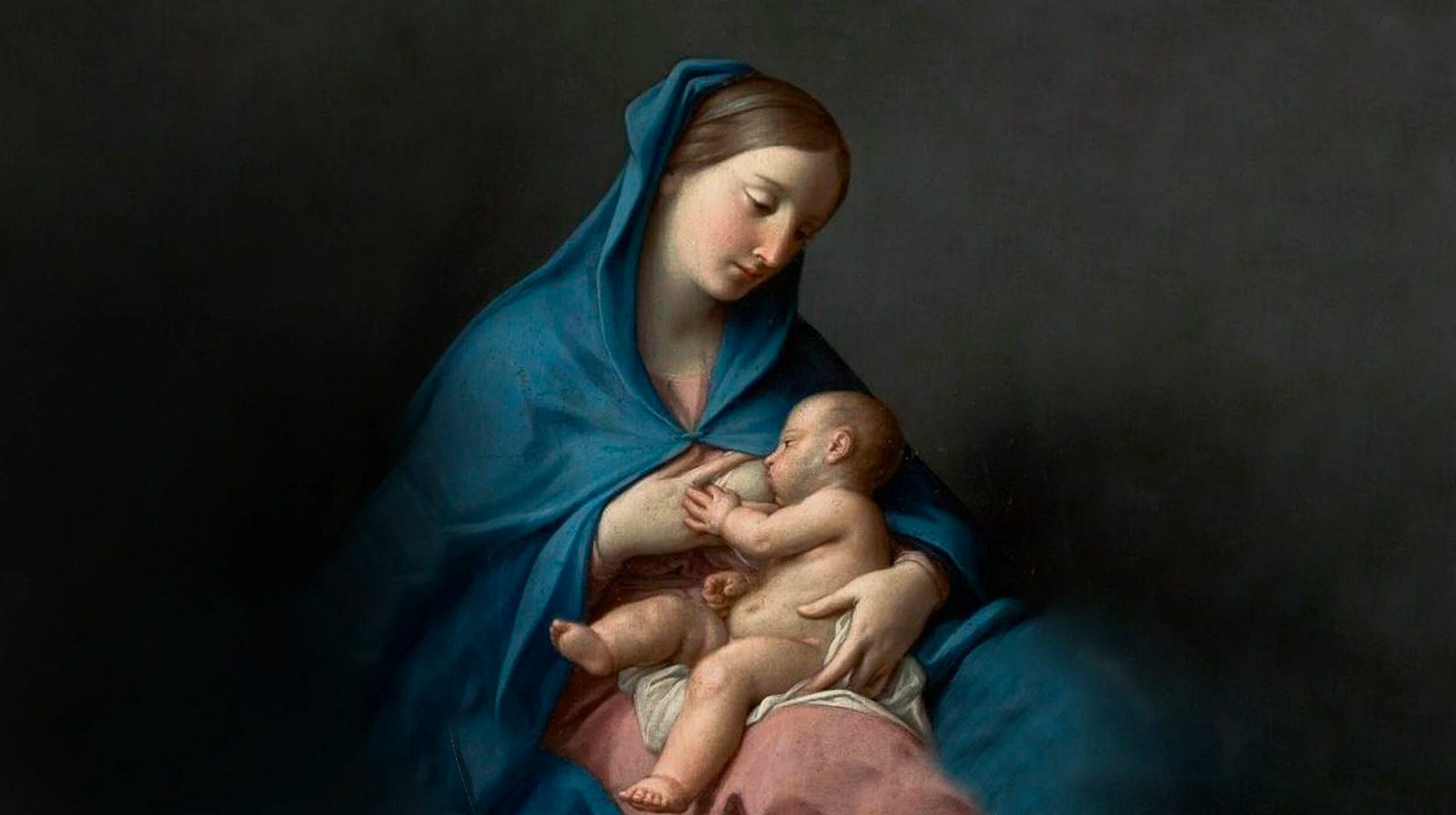
A grandmother leans in, whispering blessings over a newborn’s first golden drops of milk. The room is calm, warm, and full of love.
In another time and place, a new mother sits in a hospital bed, glancing at the clock, trying to follow a feeding schedule, unsure if she’s doing it right.
From sacred moments to scheduled routines—breastfeeding has changed. This write-up explores that shift through Ayurveda, ancient wisdom, and cultural traditions.
1) Feed With Your OWN Breast
In Ayurveda, the first and most important rule is simple: a mother should feed her own baby from her own breast, unless there is an unavoidable reason not to.
The Sanskrit term Stanya means breast milk, and paan means feeding. Ayurveda teaches that Stanya is the Upadhātu (byproduct) of Rasa Dhātu—the vital essence that nourished the fetus during pregnancy. In other words, breast milk is not just food; it is the direct essence of the mother’s nutrition, vitality, and life force.
This isn’t just poetic philosophy. The mother’s milk carries her unique dosha balance, immune factors, and even emotional imprint—perfectly matched to the baby she carried for nine months. This genetic compatibility ensures that her milk is the baby’s ideal first medicine.
There’s also the Mana–Sharira–Bhāva connection—the integration of mind, body, and emotion. Emotional bonding is believed to shape the baby’s mental stability and sense of security. Even modern science supports this: babies can recognize their mother’s unique smell, and that scent becomes a powerful anchor for both physical nourishment and emotional comfort.
When feeding is delegated unnecessarily to bottles, formula, or even another lactating woman without medical reason, this subtle yet profound connection can weaken.
2) Feed with BREAST
Breastfeeding isn’t just about what flows from the breast—it’s also about what happens during the act. The very mechanics of breastfeeding create benefits that cannot be replicated by bottle-feeding.
Biological Touchpoints
· Hormonal Symphony: Skin-to-skin contact and suckling stimulate the release of oxytocin, the “love hormone,” in both mother and baby. This hormone not only triggers milk let-down but also calms the mother, reduces postpartum bleeding, and strengthens the emotional bond.
· Body as Incubator: The mother’s chest naturally adjusts its temperature to warm or cool the baby—a silent thermal regulation system bottles simply cannot provide.
· Facial and Oral Development: The effort of suckling strengthens the baby’s jaw, tongue, and facial muscles, helping to shape the palate correctly. Bottles, with their easy flow, require less effort and may not fully develop these muscles.
Wisdom from Traditional Chinese Medicine (TCM)
In TCM, breastfeeding is a vital way to transfer Qi (life energy) and Yin nourishment from mother to child. The breast and mouth are connected to meridians like the stomach and lung channels, which support digestion and breathing. Suckling stimulates blood and Qi circulation in both mother and baby, aiding in recovery and growth.
Even if breast milk isn’t flowing abundantly right away, placing the baby at the breast is critical. It triggers the sucking reflex, which strengthens oral muscles, prepares for efficient feeding, and deepens the emotional connection. The warmth of the skin-to-skin hold creates a womb-like safety net, signalling to the baby that all is well.
The Stored Milk Question
Modern breast milk banks save lives for babies who can’t access their own mother’s milk, but when it becomes a convenience for healthy mothers and infants, some drawbacks appear:
· Nutritional and immune properties can diminish during storage.
· The dynamic, “custom-made” adaptation of milk to a baby’s needs in real time is lost.
· The intimate feedback loop—baby’s suckling influencing milk composition—is broken.
3) Feed with BREAST MILK
Nature has already given mothers the perfect elixir—Ayurveda calls it Piyush, or nectar. So why replace it with powdered formula? If you’re tempted to say, “Well, formula is just as good,” that’s like saying instant coffee is the same as freshly brewed—you can sip it, but you’re missing the magic.
In today’s world, formula feeding often arises not just out of necessity but from cosmetic concerns about breast shape or lingering social stigma. This ignores the fact that natural breastfeeding has a complexity formula can’t imitate:
· Colostrum: The thick, golden first milk, rich in immune-boosting ojas.
· Transitional Milk: Shifts composition as the baby grows in the first weeks.
· Day–Night Variations: Morning milk energizes, and night milk soothes—aligned with the body’s Vata-Pitta-Kapha cycles.
· Foremilk vs. Hindmilk: The early part of a feed hydrates and cleanses; the later part nourishes and builds tissues (Ashaaya Bheda).
Ask yourself: How can one static formula possibly mimic such a living, adapting, time-sensitive substance? It can’t
4) Erosion of Ancient Postpartum Rituals
For centuries, cultures worldwide understood that childbirth wasn’t just a medical event—it was a profound transformation requiring rest, care, and nourishment. Postpartum rituals weren’t luxuries; they were the very scaffolding that helped mothers heal, bond with their babies, and establish strong breastfeeding.
Today, these rituals are disappearing. Workplace demands often force mothers back before their bodies and minds are ready. For immigrant women, the shift to nuclear households and fragmented cultural identity can mean no elder women nearby to pass down ancestral breastfeeding and recovery wisdom.
Ayurveda names this delicate period Sutika Kāla and prescribes a Sutika Paricharya—a 1.5-month regimen of special diet, rest, and therapies:
· Restores ojas (vitality) lost in pregnancy and delivery.
· Balances vata dosha, preventing anxiety, fatigue, and irregular milk flow.
· Supports uterine healing and digestion.
· Improves milk quality and quantity while nurturing the bond with the baby.
Ayurveda’s Ṣoḍaśa Saṃskāra
Ayurveda’s sixteen life rituals guide smooth transitions from marriage to death. Among them, Garbhasanskara (read more about – GARBHSANSKARA) helps a woman move effortlessly from pre‑motherhood to post‑motherhood, nurturing body, mind, and spirit for healthy breastfeeding and bonding
Other cultural Snapshots of Breastfeeding Wisdom
Ancient Egypt—Goddesses like Isis were depicted nursing Horus, symbolizing divine nourishment. While wet nurses served elites, a mother’s own milk was considered the most potent life force. Pharaohs’ divine right was even linked to sacred milk.
Greek & Roman Traditions—Thinkers like Hippocrates valued mother’s milk for shaping temperament and health. While wet nurses were common, some philosophers urged mothers to nurse to pass on virtues. Myths tied milk to the cosmos—Hera’s spilled milk forming the Milky Way.
Biblical References—Seen as a blessing; Exodus tells how Pharaoh’s daughter chose Moses’ own mother to nurse him, underscoring the irreplaceability of biological mother’s milk.
Islamic Tradition—The Qur’an advises two full years of breastfeeding, tying it to nutrition, bonding, and divine duty. Introduced the concept of milk kinship—a lifelong legal bond from nursing.
CONCLUSION
These are not just historical curiosities. They are living reminders that breastfeeding is more than nutrition—it’s heritage, healing, and human connection. In today’s fast-moving world, the cultural heart of breastfeeding is beating faintly, but it’s still there, waiting to be reclaimed.
So here’s the question: How can we bridge the cultural gap? Can we adapt ancient care to modern life without losing its soul? Think about it. Talk about it. Share your insights. Because a baby’s first sip should be more than just scheduled—it should be sacred.
This Breastfeeding Week, let’s reflect, revive, and adapt these timeless practices—so that every mother and baby can experience the true heart of breastfeeding.
Consult Dr. Aishwarya Vasava in Mississauga or online
Looking for personalized Ayurvedic guidance? Explore our postnatal and women’s health care at Jeevdhaari Keraliya Ayurveda, 1616 Matheson Blvd Unit 25, Mississauga, or consult online from anywhere in Canada. Book an appointment or call +1 (416) 991-4809.