

Human life begins with conception, but Ayurveda emphasizes that the journey of a child’s health and well-being starts even earlier—during the development of new follicles in women and sperm in men. What prospective parents eat, how they live, and even what they think during this preparatory phase has profound implications for the health and personality of their child. Modern science is beginning to support what Ayurveda has long maintained: nutrition and lifestyle choices before conception directly influence fertility, pregnancy outcomes, and the lifelong health of the offspring.
This article explores the Ayurvedic view of food classification (Satva, Rajas, and Tamas), the significance of the preparatory period before conception, and the latest scientific findings that affirm this wisdom. It also draws on classical texts such as Ideal Birth, which emphasize how intentional preparation shapes progeny.
Ayurveda on Food and Its Influence
Ayurveda classifies food into three categories, each shaping body and mind differently:
-
Satva (Purity and Balance): Foods that promote clarity, calmness, and vitality. Examples include fresh fruits, vegetables, nuts, milk, whole grains, and mild herbs. They nourish both body and mind, making them ideal during conception planning.
-
Rajas (Activity and Passion): Foods that stimulate, energize, and increase restlessness or desires. Spicy foods, stimulants like caffeine, and excessively salty or sour foods fall in this group.
-
Tamas (Inertia and Ignorance): Foods that dull the mind, induce lethargy, and accumulate toxins. Overprocessed, stale, fried, fermented, or intoxicating substances belong here.
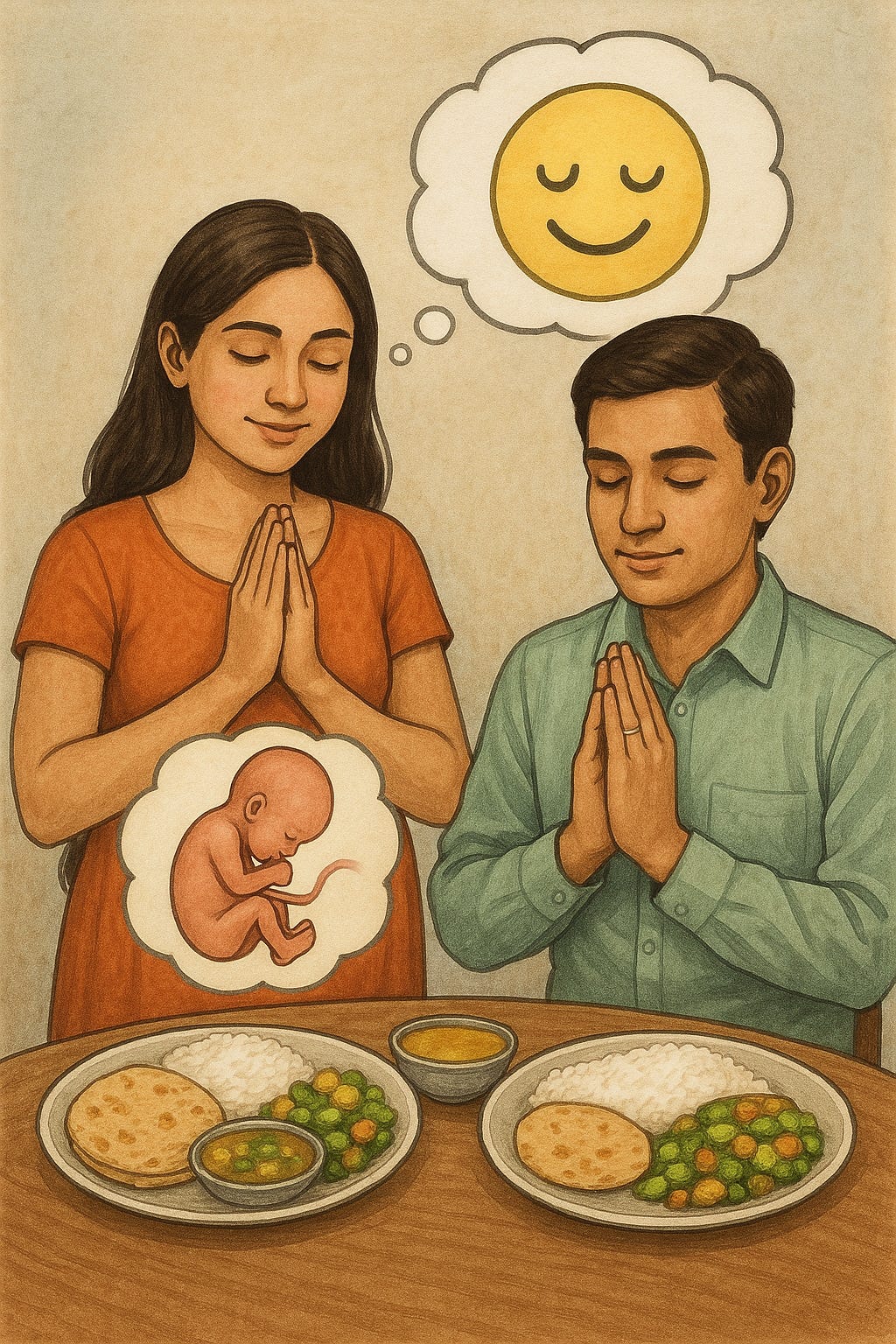
Ayurveda teaches that a Satvic diet before and during conception preparation builds purity in gametes, balances hormones, and fosters mental stability—creating the best possible foundation for the child.
Diet, Conduct, and Actions on Progeny
Ancient Ayurvedic wisdom holds that “The kind of food, conduct, and actions with which a man and a woman have intercourse, and the kind of children they have are of that kind.” This extends beyond the act of union itself to the preparatory period leading up to conception.
This preparatory period, sometimes referred to as a gestation window, is ideally one month. During this time, both parents should align their diet, thoughts, and actions to achieve the kind of child they desire—whether strong, intelligent, stable, or joyful.
Classical guidance includes:
-
Avoiding intoxicants such as alcohol, opium, or morphine for at least one month before conception.
-
Choosing fresh, wholesome, Satvic foods to promote balance in the reproductive system.
-
Engaging in positive thoughts, meditation, and self-restraint to stabilize the mind.
The book Ideal Birth explains, “By procreation, we want to transmit our ego and make it go on living in our children and children’s children. And therefore, because we want to and must give our best, we should set aside a certain time for concentration on the duty in which we prepare body and mind.”
The One-Month Window of Preparation
-
For Women: Follicle development takes around 90 days, but the final stage of maturation and selection of the dominant follicle happens in the weeks before ovulation. During this time, nutrition, stress, and toxins directly affect egg quality.
-
For Men: Sperm production is continuous, but it takes approximately 64–74 days for sperm to fully mature. Even so, a one-month period of preparation before conception significantly impacts sperm vitality, motility, and DNA integrity.
Thus, Ayurveda’s emphasis on a preparatory month is both practical and biologically sound.
Modern Science on Preconception Nutrition
Recent research supports the Ayurvedic perspective:
-
Folate and B-Vitamins: Adequate folate intake before conception reduces neural tube defects and improves ovum quality. [CDC, 2021]
-
Antioxidants and Fertility: Studies show that diets rich in antioxidants (found in fruits, vegetables, and nuts) improve sperm motility and protect eggs from oxidative stress. [Agarwal et al., 2019]
-
Alcohol and Fertility: A 2018 study in Human Reproduction confirmed that women consuming alcohol, even moderately, before conception had lower fertility rates. Men who consumed alcohol showed reduced sperm quality.
-
Obesity and Epigenetics: Maternal and paternal obesity before conception alters the epigenetic profile of gametes, predisposing offspring to obesity and metabolic disorders. [Soubry, 2018]
-
Toxins and Egg/Sperm Quality: Research published in Nature Reviews Endocrinology (2020) highlighted that environmental toxins (such as BPA, pesticides, and heavy metals) compromise egg and sperm integrity, raising the risk of miscarriages and birth defects.
The Epigenetic Link
Epigenetics explains how environmental factors, including diet and lifestyle, influence gene expression without changing DNA. Studies confirm that:
-
Nutrients like folate, B12, choline, and omega-3 fatty acids regulate DNA methylation, which affects embryonic development.
-
Stress and poor nutrition can “switch off” protective genes in offspring.
-
Healthy preconception choices can “switch on” genes that support resilience, intelligence, and longevity.
This modern framework validates Ayurveda’s emphasis on the role of parents’ diet and behavior before conception.
Conduct, Mind, and Progeny
Ayurveda stresses that not only food but also conduct, emotions, and mental states during the preparatory period impact the progeny. Mental agitation, anger, anxiety, or overindulgence in desires can manifest in the child as instability or restlessness. Conversely, parents who cultivate calmness, compassion, and mindfulness help seed these traits in their child.
This is echoed in modern psychology: prenatal stress in parents is linked to higher risk of ADHD, anxiety, and behavioral issues in children. [Van den Bergh, 2020]
Guidance for Prospective Parents
Both Ayurveda and modern science agree that diet, lifestyle, mental state, and environment before conception shape the health and future of the child. Prospective parents should be mindful of these areas. If someone wishes to make real changes—whether in food habits, daily routine, or mental preparation—they should seek proper guidance and personalized support. This ensures the adjustments are practical, sustainable, and tailored to their unique needs.
Conclusion
Ayurveda and modern science converge on one point: conception is not merely a biological act but a holistic event influenced by food, conduct, and thought. What parents consume and how they live in the weeks before conception sets the foundation for their child’s health, resilience, and mental stability.
By honoring this preparatory window and choosing Satvic foods, positive conduct, and mindful actions, prospective parents can give their future children the best possible start in life. As Ideal Birth wisely notes, procreation is not just about continuing lineage—it is about transmitting the best of ourselves into the next generation.
References:
-
Agarwal, A., et al. (2019). Role of antioxidants in assisted reproductive techniques. Reproductive Biology and Endocrinology.
-
Centers for Disease Control and Prevention (CDC). (2021). Folate and pregnancy.
-
Soubry, A. (2018). Epigenetics as a driver of developmental origins of health and disease: A paradigm shift in prenatal care. Current Opinion in Pediatrics.
-
Van den Bergh, B. R., et al. (2020). Prenatal stress and offspring mental health. Nature Reviews Neuroscience.
-
Nature Reviews Endocrinology. (2020). Environmental influences on gamete integrity.
-
Ideal Birth (Classical reference text).
Consult Dr. Aishwarya Vasava in Mississauga or online
Looking for personalized Ayurvedic guidance? Explore our Garbhasanskar program for couples at Jeevdhaari Keraliya Ayurveda, 1616 Matheson Blvd Unit 25, Mississauga, or consult online from anywhere in Canada. Book an appointment or call +1 (416) 991-4809.